

Throughout history, British inventions have had a profound impact on the modern world, shaping industries, transforming daily life, and driving technological progress. From the Industrial Revolution to the digital age, innovations originating in Britain have helped redefine how people work, communicate, and move through life. These creations, often sparked by curiosity and necessity, demonstrate the remarkable inventiveness rooted in British culture.
The influence of British inventions can be seen across a wide range of fields, including science, engineering, medicine, and transport. What makes these breakthroughs particularly fascinating is how many have become so integrated into everyday life that it’s easy to forget their origins. This legacy of ingenuity continues to inspire new generations of inventors and entrepreneurs, reinforcing Britain’s place on the global innovation stage.
Best British inventions
One of the most compelling aspects of British inventions is their lasting global relevance. Many of these innovations were not just functional but revolutionary, introducing concepts that would become standard across nations. These inventions often sparked major shifts in society, enabling mass production, faster communication, or improved health standards. Their development often required not just creativity, but also persistence, experimentation, and bold thinking.
Moreover, the success of many British inventions lies in their adaptability. Over time, they have evolved and been refined, maintaining their usefulness even as technology and society advance. The environments that gave rise to these ideas—ranging from academic institutions to small workshops—illustrate the diverse sources of inspiration behind British ingenuity. This blend of originality and practicality has ensured that many British creations stand the test of time.
1- Steam engine
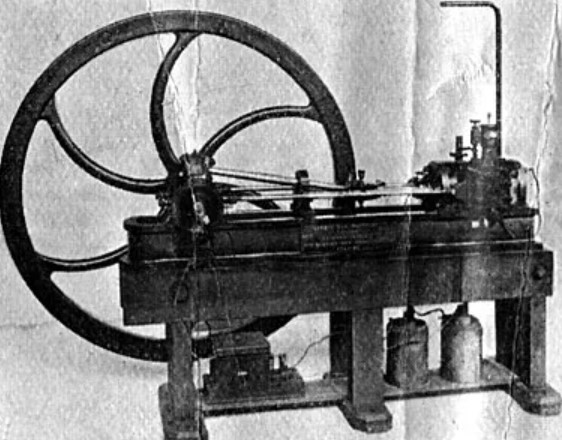
The steam engine is a pivotal inventionthat dramatically transformed industry and transportation. Invented by James Watt in the late 18th century, it marked the beginning of the Industrial Revolution. Watt’s improvements to the existing steam engine design made it more efficient and practical for widespread use. His innovations allowed for a more reliable power source, facilitating the growth of factories and mechanised production.
Watt’s steam engine operated on the principle of converting heat energy into mechanical work. This breakthrough enabled the engine to power a variety of machines, from textile mills to locomotives. By improving the design, Watt increased its efficiency, allowing it to use less fuel and produce more power. This advancement significantly reduced the cost of production and increased productivity.
The impact of the steam engine extended beyond industry. It revolutionised transportation, paving the way for steam-powered trains and ships. The introduction of railways connected cities and regions, transforming trade and travel. The steam engine fundamentally changed the landscape of the 19th century, making it possible to transport goods and people over long distances with unprecedented speed.
James Watt’s contributions to the steam engine have had a lasting legacy. His work laid the foundation for modern engineering and energy production. The steam engine remains a symbol of innovation, representing the dramatic shift toward mechanisation that shaped the modern world.
Inventor and date: James Watt, 1776.
2- Reflecting telescope
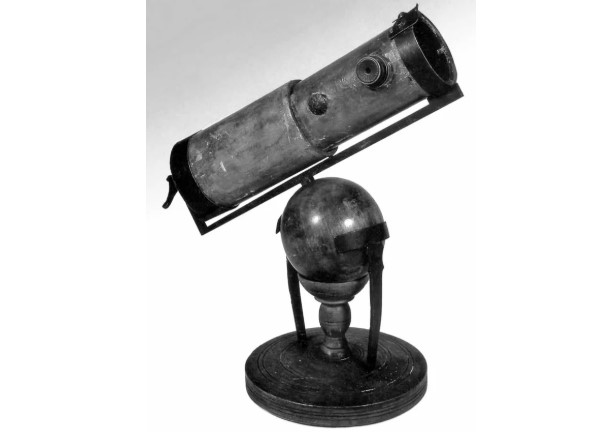
The reflecting telescope is a significant British invention that revolutionised astronomy. Designed by Isaac Newton in the late 17th century, it replaced earlier refracting telescopes, which suffered from chromatic aberration. Newton’s innovative approach used mirrors instead of lenses, allowing for clearer and more accurate observations of celestial bodies.
Newton’s reflecting telescope employed a concave mirror to gather light and reflect it to a focal point. This design eliminated many of the distortions caused by glass lenses, providing a more precise view of the universe. The advantages of this design quickly became apparent to astronomers, leading to its adoption in observatories across Europe.
The impact of Newton’s invention extended beyond mere optics. It opened new avenues for astronomical research, enabling scientists to explore the cosmos in unprecedented detail. With clearer images, astronomers could study planets, stars, and galaxies, leading to significant advancements in our understanding of the universe. Newton’s telescope paved the way for future innovations in astronomical instruments.
Today, the principles of Newton’s reflecting telescope continue to influence modern astronomy. Telescopes used in space exploration still rely on similar designs to capture images of distant celestial phenomena. The legacy of Isaac Newton’s invention is a testament to the enduring power of innovation in expanding our knowledge of the universe.
Inventor and date: Isaac Newton, 1668.
3- Television
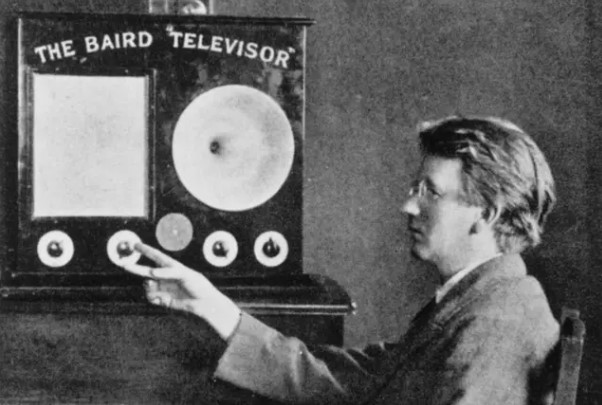
Television is a groundbreaking invention that has transformed entertainment and communication. John Logie Baird, a Scottish inventor, made significant strides in developing the first practical television system in the 1920s. His pioneering experiments laid the groundwork for the visual medium we know today. Baird’s vision of transmitting moving images became a reality through his relentless pursuit of innovation.
Baird’s early television system utilised a mechanical process to scan and transmit images. He successfully demonstrated the first televised images, captivating audiences and proving the potential of this new technology. His innovations included the use of a rotating disc to capture images, which were then transmitted to a receiver. Despite the technical limitations of the time, Baird’s work showcased the possibilities of television as a medium for storytelling and information dissemination.
The impact of Baird’s invention was profound. Television quickly became a staple in households, fundamentally changing how people consumed news and entertainment. As technology advanced, Baird’s contributions paved the way for electronic television and colour broadcasting. His early experiments were instrumental in shaping the future of visual media.
Today, television remains a central part of modern culture. It continues to evolve, incorporating new technologies and platforms for viewing. The legacy of John Logie Baird is etched in the very fabric of our daily lives, highlighting the importance of innovation in shaping communication.
Inventor and date: John Logie Baird, 1926.
4- World Wide Web

The World Wide Web is one of the most significant inventions of the modern era, fundamentally changing the way we access and share information. Developed by Tim Berners-Lee in the late 1980s, it revolutionised communication and commerce on a global scale. Berners-Lee envisioned a system that would allow researchers to share information seamlessly, leading to the creation of the web as we know it today.
The web operates on a simple yet powerful concept: hypertext. By using hyperlinks, users can navigate between web pages, creating an interconnected network of information. This innovation made it possible for anyone with internet access to find and share knowledge easily. Berners-Lee’s vision of an open and accessible web has profoundly influenced education, business, and social interaction.
The impact of the World Wide Web has been transformative. It has enabled the rapid dissemination of information and fostered global communication. E-commerce emerged as a direct result, allowing businesses to reach consumers worldwide. The web has also become a platform for social interaction, with social media and online communities shaping how we connect with others.
Today, the World Wide Web is an integral part of daily life. It continues to evolve, with advancements in technology enhancing user experience and accessibility. Tim Berners-Lee’s legacy is the empowerment of individuals through information, showcasing the profound impact of his groundbreaking invention.
Inventor and date: Tim Berners-Lee, 1989.
5- Jet engine
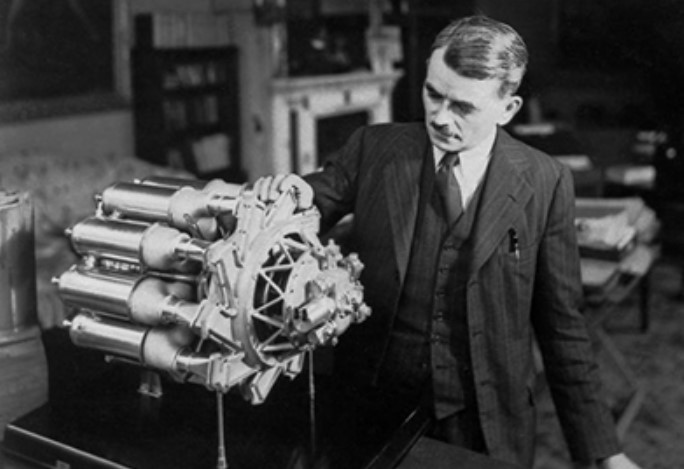
The jet engine is a revolutionary invention that transformed air travel and military aviation. Developed during the early 20th century, it introduced a new era of speed and efficiency in flight. British inventor Sir Frank Whittle is credited with creating the first practical turbojet engine, which laid the groundwork for modern aviation technology.
Whittle’s design used jet propulsion, which propelled aircraft forward by expelling exhaust gases at high speed. This innovation allowed planes to fly faster and higher than ever before, fundamentally changing air travel. The turbojet engine enabled commercial airlines to shorten travel times significantly, connecting distant parts of the globe.
The impact of the jet engine extended beyond commercial aviation. It played a crucial role in military aviation, providing fighter jets with unmatched speed and agility. The speed and power of jet engines changed air combat tactics and contributed to advancements in aerospace technology. Whittle’s invention ushered in a new age of military capabilities, giving countries greater reach and operational effectiveness.
Today, the jet engine remains essential to air travel. It continues to evolve, with advancements in efficiency and environmental sustainability. The legacy of Sir Frank Whittle’s innovation is evident in every flight, highlighting the enduring impact of his contributions to aviation.
Inventor and date: Sir Frank Whittle, 1937.
6- Leonardo da Vinci’s flight code (influenced by British studies)
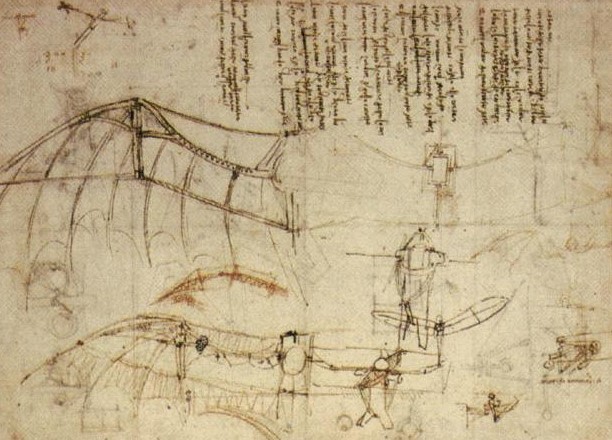
British studies on aerodynamics and flight have significantly shaped our understanding of human flight. The pioneering work of British researchers laid the foundation for innovations inspired by Leonardo da Vinci’s flight code. Da Vinci’s sketches and concepts provided a glimpse into the possibilities of flight, long before the first aircraft took to the skies. British scientists explored these ideas, analysing the principles of lift and drag. Their research was crucial in moving from theoretical designs to practical applications.
The contributions of British thinkers were vital in decoding Da Vinci’s intricate designs. They meticulously examined his principles and translated them into modern aeronautics. This included the study of wing shapes and the mechanics of flapping flight. By applying these principles, British inventors tested various models, leading to breakthroughs in aviation technology. The synergy between Da Vinci’s vision and British innovation is a testament to the power of collaboration across centuries.
Moreover, the British approach to flight extended beyond mere imitation. They sought to improve and innovate, creating functional flying machines inspired by Da Vinci’s concepts. This ambition led to the development of early gliders and eventually powered aircraft. The impact of these studies resonates today, as modern aerodynamics builds upon the groundwork laid by both Da Vinci and British innovators.
As a result, the influence of British studies on Leonardo da Vinci’s flight code cannot be overstated. They transformed theoretical ideas into the realities of flight we experience today. The journey from Da Vinci’s sketches to modern aircraft exemplifies the enduring legacy of these British contributions.
Inventor and date: Various British researchers inspired by Leonardo da Vinci’s designs, 15th century onwards.
7- Aspirin
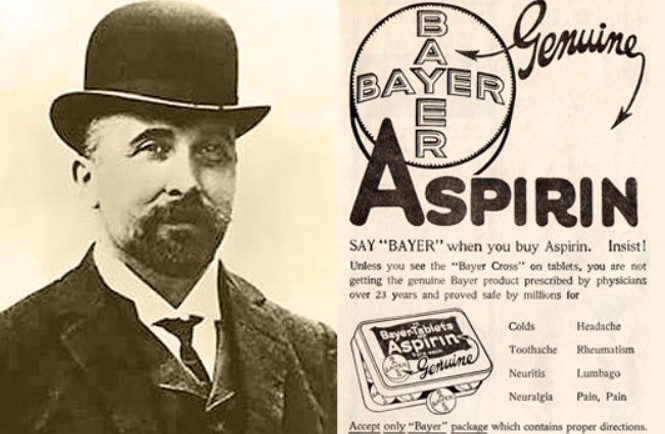
Aspirin is one of the most widely used medications globally, originating from British invention. This revolutionary pain-relief drug was first synthesised in the late 19th century by British chemist Felix Hoffmann. Hoffmann worked for the German pharmaceutical company Bayer, but his groundbreaking formula was influenced by earlier British studies on salicylic acid. This compound was derived from willow bark, known for its medicinal properties.
The significance of aspirin lies in its ability to reduce pain, inflammation, and fever. It quickly became a staple in medicine due to its effectiveness and safety. The British medical community embraced aspirin, recognising its potential to alleviate suffering. Soon, it was being prescribed for various ailments, from headaches to arthritis. This widespread acceptance marked a turning point in pharmaceutical history.
Moreover, aspirin’s benefits extend beyond mere pain relief. Research has shown that it can reduce the risk of heart attacks and strokes. This discovery further solidified its place in modern medicine. British researchers played a crucial role in unveiling these additional benefits, expanding the drug’s use in preventative care.
The legacy of aspirin is profound. It represents a significant advancement in pharmacology, demonstrating the importance of British innovation in healthcare. Today, millions rely on this simple yet powerful medication, a testament to its enduring efficacy and the brilliance of its British roots.
Inventor and date: Felix Hoffmann, 1897.
8- Radar
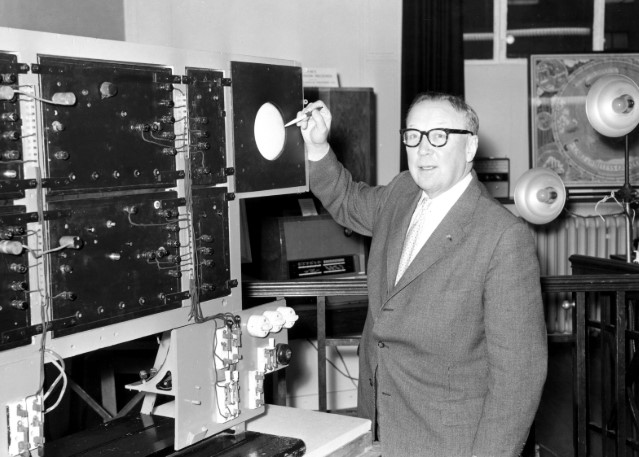
Radar technology is a remarkable British invention that revolutionised military and civilian applications. Developed in the early 20th century, radar was crucial during World War II for detecting enemy aircraft. British scientists, particularly Robert Watson-Watt, played a pivotal role in its advancement. They recognised the potential of radio waves to detect objects at a distance, paving the way for modern radar systems.
The initial concept of radar involved bouncing radio waves off objects. This process allowed for the accurate detection of planes and ships, significantly changing warfare tactics. British forces quickly adopted this technology, gaining a strategic advantage in aerial combat. The success of radar during the war showcased the ingenuity of British inventors and their ability to respond to pressing challenges.
Post-war, radar technology found applications beyond the battlefield. It became integral in air traffic control, weather forecasting, and maritime navigation. The versatility of radar demonstrated its importance in civilian life. British engineers continued to innovate, developing more sophisticated radar systems that enhanced safety and efficiency across various sectors.
Today, radar remains a vital component of modern technology. It continues to evolve, influencing everything from autonomous vehicles to space exploration. The legacy of British innovation in radar exemplifies a commitment to improving technology for the betterment of society.
Inventor and date: Robert Watson-Watt, 1935.
9- Debit card
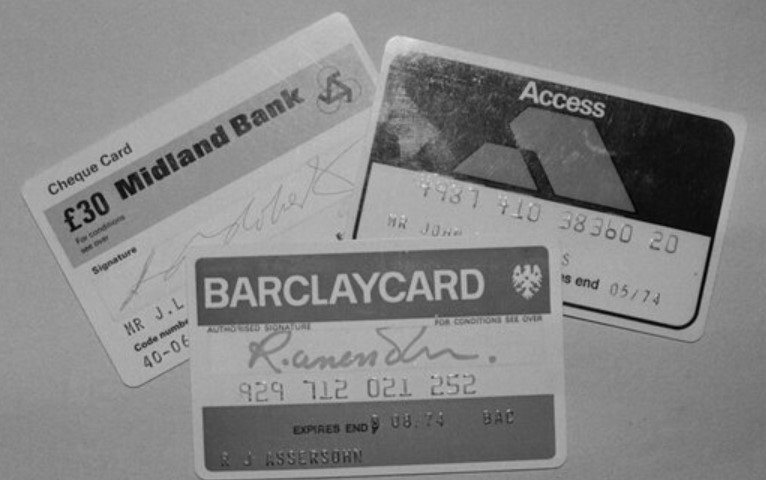
The debit card is a modern financial tool that originated from British innovation. Its development transformed the way consumers manage their finances, paving the way for cashless transactions. The concept of a card linked directly to a bank account emerged in the 1960s, with British banks leading the charge. This innovation offered a convenient alternative to traditional cash and cheques.
British inventors designed the first debit cards to simplify transactions. These cards allowed customers to make purchases directly from their bank accounts without needing cash. This convenience appealed to consumers, leading to rapid adoption across the UK. As more retailers accepted debit cards, shopping became more streamlined and efficient.
The technology behind debit cards has also evolved significantly. Initially reliant on magnetic stripes, advancements led to the introduction of chip-and-pin technology. This enhancement improved security, making transactions safer for users. British banks were at the forefront of these innovations, ensuring that their customers could enjoy secure and easy access to their funds.
Today, debit cards are an essential part of daily life. They represent a significant shift towards digital banking, reflecting changing consumer habits. The influence of British innovation in this field has left a lasting impact on how we conduct financial transactions.
Inventor and date: Various British banks, 1960s.
10- First railway system
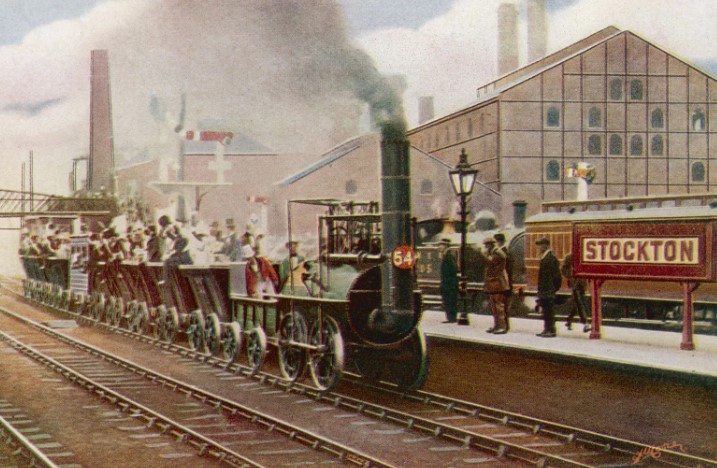
The first railway system is a monumental British invention that revolutionised transportation. Developed in the early 19th century, it laid the groundwork for modern rail networks. George Stephenson, known as the “Father of Railways,” played a crucial role in this transformation. His pioneering work on locomotives and railway construction changed the face of travel and commerce.
The initial railway lines were designed to transport goods. However, the introduction of steam locomotives opened up new possibilities for passenger travel. Stephenson’s locomotive, the Locomotion No. 1, became a symbol of this new era. As railways expanded across Britain, they connected cities and facilitated trade like never before.
The impact of the railway system extended beyond transportation. It stimulated the economy, creating jobs and encouraging industrial growth. The movement of goods became faster and more efficient, contributing to Britain’s status as a global industrial leader. Railways transformed the social landscape, enabling people to travel further for work and leisure.
Today, the legacy of the first railway system is evident in transportation networks worldwide. It represents a significant leap in technology and innovation, reshaping society and the economy. The influence of British inventors in this field continues to be felt as railways remain a vital part of modern infrastructure.
Inventor and date: George Stephenson, 1825.
Faq’s
What are some of the most influential British inventions in history?
British inventions have had a significant impact on the way the world functions today. These creations have shaped industries, improved communication, and transformed everyday life. From advances in technology to developments in science, British innovations have been at the forefront of global progress. Their influence can still be seen in modern society.
How have British inventions contributed to global technological progress?
British inventions have laid the foundation for many technological breakthroughs used across the world. They introduced concepts and mechanisms that have since evolved into essential tools and systems. By pioneering new methods and ideas, these inventions have helped spur innovation in countries far beyond the UK. Their legacy continues to influence engineering, medicine, and digital development.
Why are British inventions considered so important in modern education?
British inventions often form a core part of science and technology curricula in schools and universities. They are studied not only for their practical impact but also for the problem-solving methods behind them. These inventions offer insight into historical figures and innovations and encourage students to think creatively and analytically. They serve as excellent examples of applying knowledge to real-world challenges.
What role have British inventions played in improving daily life?
Many British inventions have revolutionised the way people live and work. From making homes more efficient to improving transport and health care, these creations have brought convenience and comfort. Their influence is deeply embedded in daily routines, often in ways people don’t even realise. They continue to be developed and refined for future use.
Are British inventions still relevant in today’s digital world?
Absolutely, many British inventions have evolved to adapt to today’s digital age. Their core principles remain relevant, even as they take on new digital forms. The adaptability of these ideas shows their timeless value and continued importance. They offer a foundation for current and future technological developments.