
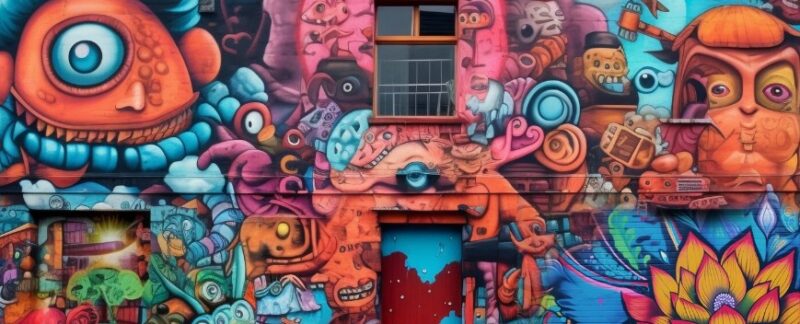
The UK brims with colour, and the best street art spots in the UK offer a brilliant way to feel a city’s pulse. From vast murals that dominate whole façades to small, sly stencils tucked down alleyways, these places celebrate local voice and craft. Visitors can wander at a gentle pace, spotting new pieces around corners and beneath railway arches. The atmosphere is relaxed, often music-filled, and always surprising — a proper reminder that great art doesn’t need a gallery wall to land a punch.
Those hunting for authentic urban creativity will find plenty to enjoy among the best street art spots in the UK. These locations mix established works with ever-changing pieces, so every visit can reveal something new. Guided walks exist, but wandering solo often yields the luckiest finds. The neighbourhoods are lively, lined with cafés and independent shops, which makes a street-art stroll a full-day treat. It’s an especially fine option for mild days and for anyone compiling low-cost, memorable things to do in the UK.
Best street art spots in the UK
Across Britain, a handful of cities consistently stand out as go-to places for mural-hunters. The best street art spots in the UK combine long-standing public projects with fresh commissions from visiting artists. In these neighbourhoods, lanes and railway arches turn into open-air galleries. The work ranges from sharp political commentary to playful portraits and large abstract pieces. For anyone planning a cultural day out, they provide colour, conversation and plenty of photo-friendly corners — all set within vibrant local scenes that welcome exploration.
Those keen on discovering mural-rich neighbourhoods can think in terms of urban mural trails and creative quarters rather than single artworks. These mural hotspots span old industrial zones, market streets and reclaimed warehouses, where art rubs shoulders with cafés and live music venues. A walk here suits crisp days and damp afternoons alike; many murals hold up well in cooler weather, making them a solid pick among things to do in winter when indoor options feel limited. Exploring these areas rewards curiosity and a little patience — bright discoveries often arrive around the next bend.
1- Brick Lane, London
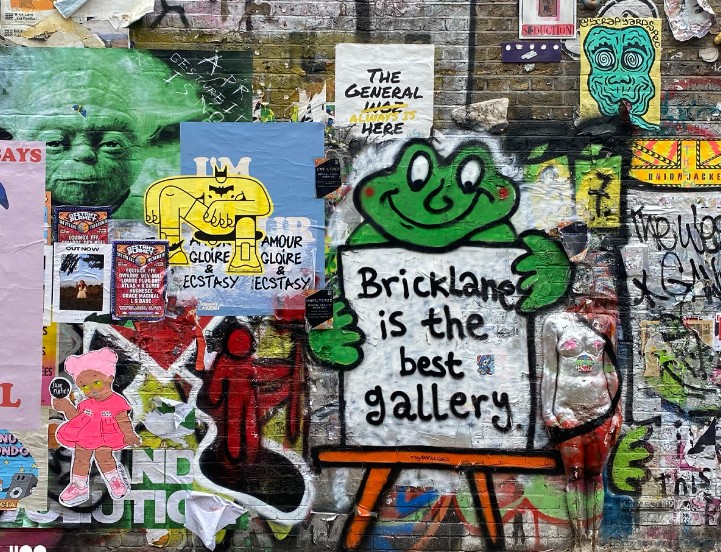
Brick Lane is one of the most iconic street art spots in the UK, known for its vivid murals and dynamic creative energy. The walls here change constantly, reflecting new artistic expressions from both local and international artists. Every corner bursts with colours, layers of paint, and messages that capture London’s diversity and rhythm. You can find massive portraits, political graffiti, and intricate stencil work that turn ordinary brick walls into open-air galleries. The atmosphere feels raw and spontaneous, inviting passers-by to stop, observe, and interpret.
Walking through Brick Lane feels like entering an outdoor museum that never stands still. Artists frequently return to update their pieces, giving the place a feeling of constant renewal. The mix of old warehouses, trendy cafes, and art-filled alleys gives Brick Lane its unique character. You might spot works by renowned artists like Banksy or ROA, but also discover rising talents experimenting with textures and forms. The narrow streets amplify the sense of discovery, as each turn reveals another unexpected masterpiece.
Beyond the paint, Brick Lane represents a living dialogue between art and community. Local residents and shop owners often embrace the changing walls, allowing art to blend naturally with everyday life. This balance between creativity and daily activity makes Brick Lane more than just a tourist stop — it’s part of London’s cultural heartbeat. The neighbourhood’s multicultural spirit adds to its artistic identity, with Bengali markets and vintage shops framing the murals in a unique mix of old and new.
Visitors often come for the art but stay for the energy. Street performers, food stalls, and small galleries create an immersive experience where art feels tangible and alive. Brick Lane remains a symbol of London’s artistic freedom and its ability to reinvent itself through visual storytelling.
Address: Brick Ln, Spitalfields, London E1 6QL.
2- Leake Street Tunnel (aka “Banksy Tunnel”), London
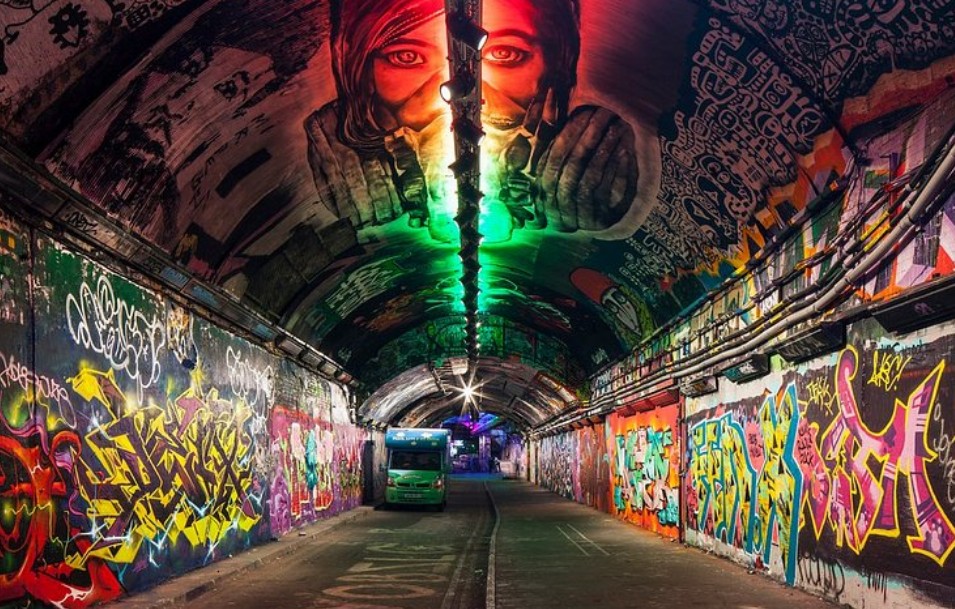
Leake Street Tunnel is one of the most fascinating urban art locations in the UK, hidden beneath Waterloo Station. Known as the “Banksy Tunnel,” it was transformed in 2008 when Banksy hosted the Cans Festival, turning a dull underpass into a thriving graffiti haven. Every inch of its concrete surface serves as a legal canvas where creativity runs wild. From elaborate murals to quick tags, the tunnel displays the full range of street art techniques, offering a raw and authentic experience.
Walking through the tunnel feels like stepping into an artist’s workshop that never closes. New creations appear daily, often layered over older works in a never-ending cycle of renewal. The constant evolution keeps the space alive, unpredictable, and deeply urban. Spray paint fills the air, and the faint echo of trains overhead adds rhythm to the experience. The dim lighting and industrial backdrop intensify the contrast of bright colours against grey concrete, creating a striking visual effect.
What sets Leake Street apart is its openness to everyone. Anyone with a can of paint can leave their mark, whether amateur or professional. This democratic spirit of expression defines the tunnel’s identity and connects it to the roots of street art culture. It’s not curated or polished — and that’s its charm. The community values its imperfection, seeing it as a raw reflection of city life and creativity.
Beyond the graffiti, Leake Street has become a cultural hotspot. Nearby bars, galleries, and pop-up events add to its underground vibe. It stands as a symbol of London’s rebellious side — a reminder that art can thrive anywhere, even in the city’s forgotten corners. For many visitors, it’s not just a tunnel but a living, breathing testament to freedom, imagination, and artistic courage.
Address: Leake St, London SE1 7NN (sometimes listed as SE1 8SW)
3- Stokes Croft / Nelson Street, Bristol
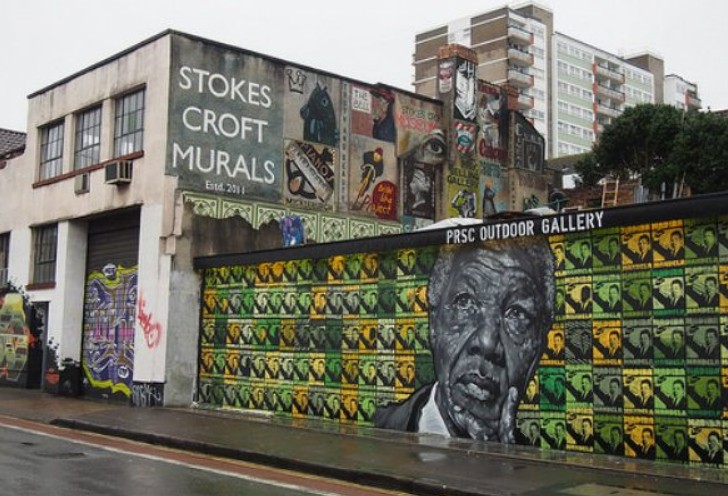
Stokes Croft is often called the artistic heart of Bristol, known for its striking murals and rebellious creative energy. Every wall tells a story of independence, community, and social expression. The area gained fame thanks to its connection with Banksy, whose early works still draw crowds. But beyond his influence, countless other artists contribute to the area’s identity, filling its streets with imaginative designs and daring messages. The energy here is spontaneous, raw, and unapologetically urban, making it one of the most vibrant street art spots in the UK.
Nelson Street, close to Stokes Croft, expanded this movement through the “See No Evil” project, which transformed the city centre into a massive outdoor gallery. Enormous murals climb the walls of office blocks and tower over the street below. Artists from across the world were invited to paint during the festival, leaving behind a legacy of visual brilliance. Each piece captures different emotions — from surreal landscapes to bold political statements — creating a dynamic mix of styles and perspectives that reflect Bristol’s artistic freedom.
What makes Stokes Croft unique is its close relationship with the local community. The neighbourhood celebrates art as a tool for change, where residents and artists collaborate to keep creativity alive. Street art here isn’t decoration — it’s communication. The messages often challenge norms, address social issues, or simply bring joy to the everyday. Even cafés, shops, and cultural spaces embrace this creative spirit, blending graffiti and design into their identity.
Visitors are drawn not only by the art but by the sense of belonging it inspires. Stokes Croft feels alive — a place where culture, rebellion, and imagination coexist. Bristol’s murals have turned once-forgotten walls into symbols of freedom, making the area a true landmark for street art lovers.
Address: 35 Jamaica St, Stokes Croft, Bristol BS2 8JP.
4- Northern Quarter, Manchester
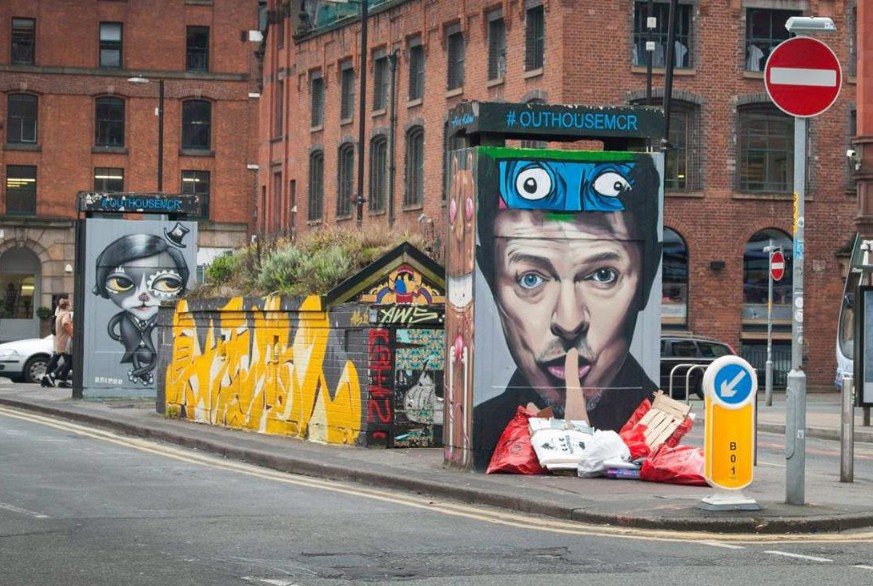
The Northern Quarter in Manchester is a thriving hub of creativity, known for its eclectic mix of murals, graffiti, and independent spirit. It’s one of the most visually striking street art areas in the UK, blending colour with culture. Every alley and corner hides a story told through paint — from pop-culture portraits to abstract designs that challenge perception. The area’s gritty, industrial background gives each artwork an authentic edge, perfectly reflecting Manchester’s artistic personality.
Walking through the Northern Quarter feels like exploring an ever-changing outdoor museum. Local and international artists regularly refresh the scene, turning plain brick walls into vibrant masterpieces. The streets around Stevenson Square and Thomas Street are especially rich in detail, with works that mirror the city’s energy and evolution. Some pieces last for years, while others vanish overnight under fresh layers of paint, keeping the atmosphere spontaneous and alive.
What sets this district apart is how art connects with everyday life. The murals sit beside vintage shops, record stores, and cafés, giving the neighbourhood a creative pulse that never fades. Street art here feels woven into the city’s fabric, not added on as decoration. Artists use it to comment on social issues, celebrate diversity, or simply capture Manchester’s humour and pride. Each work contributes to the Quarter’s identity as a space where creativity and culture thrive side by side.
The Northern Quarter has become a must-visit for art lovers, photographers, and curious wanderers. The mix of colour, texture, and meaning offers endless visual surprises. More than just graffiti, it’s a living dialogue between the artists and the city — proof that Manchester’s creativity runs deep through its streets.
Address: Stevenson Square, 37 Lever St, Manchester M1 1LW.
5- Camden Town, London
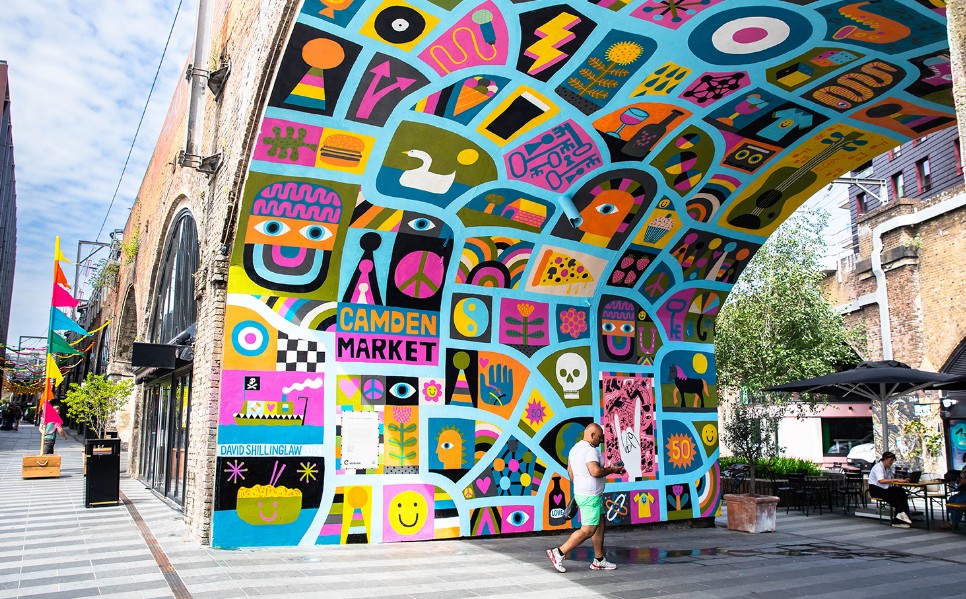
Camden Town is one of the most distinctive street art spots in the UK, famous for its rebellious edge and bohemian character. Its walls, bridges, and alleys showcase a mix of colour, chaos, and creativity that define London’s alternative side. From large-scale murals to small, hidden stencils, every piece adds to the area’s electric personality. The street art here mirrors Camden’s spirit — bold, unfiltered, and constantly evolving — making it a favourite destination for art enthusiasts and curious visitors alike.
The stretch along Camden High Street and the canal paths offers an incredible display of artistry. Vibrant portraits, abstract designs, and cultural tributes decorate every corner. Artists from around the world leave their mark here, transforming industrial spaces and shopfronts into visual statements. Some works comment on social issues, while others simply celebrate music, individuality, and freedom — all key themes that reflect Camden’s cultural heritage. The mix of styles, from graffiti lettering to intricate realism, ensures there’s always something new to discover.
Beyond the visuals, Camden Town’s street art is deeply intertwined with its local identity. The area has long been a magnet for musicians, performers, and creatives, giving the artwork around it a sense of shared energy. The connection between music and street art is particularly strong here, with many murals paying homage to iconic figures like Amy Winehouse. The neighbourhood’s open attitude allows artists to experiment freely, turning Camden into a constantly changing exhibition.
Walking through Camden feels like stepping inside London’s creative heartbeat. Between markets, live music venues, and colourful façades, art breathes through every surface. The district captures the essence of urban expression — loud, unapologetic, and endlessly inspiring. For many, Camden Town remains a living canvas that celebrates London’s diversity through pure artistic passion.
Address: Camden High St, Camden Town, London NW1 7BT.
6- Hackney Wick & Fish Island, London
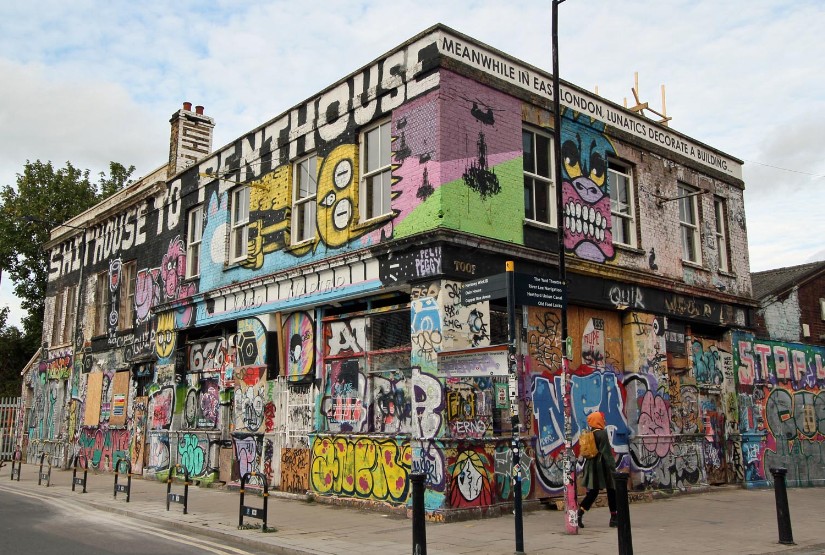
Hackney Wick and Fish Island are renowned urban art locations in the UK, representing a perfect fusion of industry, creativity, and community. Once an industrial hub, the area has transformed into a vibrant playground for street artists. Old warehouses, canal bridges, and concrete walls have become colourful backdrops for large-scale murals and spontaneous graffiti. The result is an immersive landscape of art that feels both gritty and imaginative, capturing the essence of East London’s creative evolution.
The streets near White Post Lane and along the River Lea are especially striking. Massive murals rise beside studios and breweries, giving the area a distinctive post-industrial charm. Artists frequently collaborate, layering their styles to create complex visual stories that speak about identity, change, and freedom. The area’s creative studios and open spaces have made it a natural gathering point for London’s art community, where new ideas constantly emerge in both paint and conversation.
Hackney Wick’s art scene thrives on experimentation. There’s no single style or theme — instead, the walls tell hundreds of stories at once. This lack of uniformity gives the area its authenticity and energy. Some works appear overnight, while others stay untouched for years, blending old and new in a seamless urban collage. The atmosphere is raw but inspiring, reflecting both the struggle and beauty of a city in transition.
Visitors are drawn by its mix of culture and contrast. Between canal walks, independent galleries, and colourful walls, Hackney Wick feels alive with creativity. It’s a place where street art feels natural, not curated — an honest celebration of London’s underground imagination. Together with Fish Island, it remains one of the capital’s most important open-air art districts, where the city’s creative pulse beats strongest.
Address: White Post Lane, Hackney Wick, London E9 5NB.
7- Bedminster & Southville, Bristol
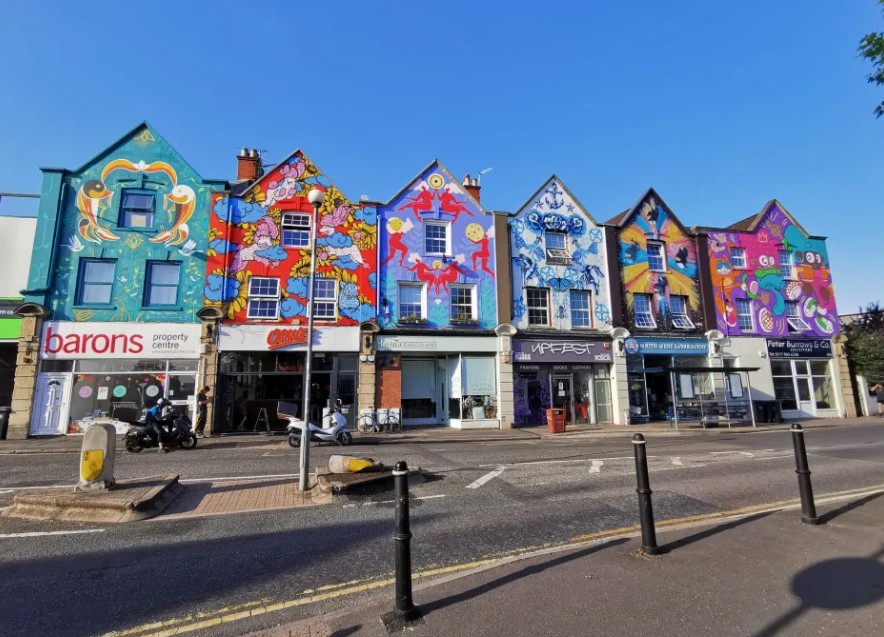
Bedminster and Southville stand among the most dynamic street art spots in the UK, celebrated for their powerful creativity and strong community involvement. North Street is the heart of it all, transformed each year into an outdoor gallery during the Upfest Festival. The event attracts artists from around the world, who turn ordinary walls and shopfronts into breathtaking murals. The atmosphere is electric, filled with colour, sound, and collaboration, making the area one of Bristol’s greatest artistic landmarks.
Even outside the festival season, the streets of Bedminster and Southville remain alive with creativity. Every mural tells a different story, blending local themes with global perspectives. You can spot everything from delicate portraits to surreal designs and playful illustrations. The art captures emotions, ideas, and movements, reflecting Bristol’s love for experimentation. The changing nature of these murals ensures that no two visits ever feel the same — the streets evolve, and the art grows alongside them.
What makes this area special is the partnership between artists, residents, and businesses. Street art is not seen as vandalism here but as a celebration of culture and identity. Local shops proudly feature painted façades, while cafés and galleries collaborate with artists to bring creative energy to the community. This shared sense of ownership has helped transform Bedminster and Southville into symbols of how art can unite and inspire people.
Strolling through North Street feels like discovering a living sketchbook filled with imagination and meaning. Every turn reveals new details — vibrant colours, clever messages, and artistic surprises that invite interpretation. For those who appreciate visual storytelling, this corner of Bristol offers an unforgettable experience that captures the city’s creative soul.
Address: North Street, Bedminster, Bristol BS3.
8- Brixton, London
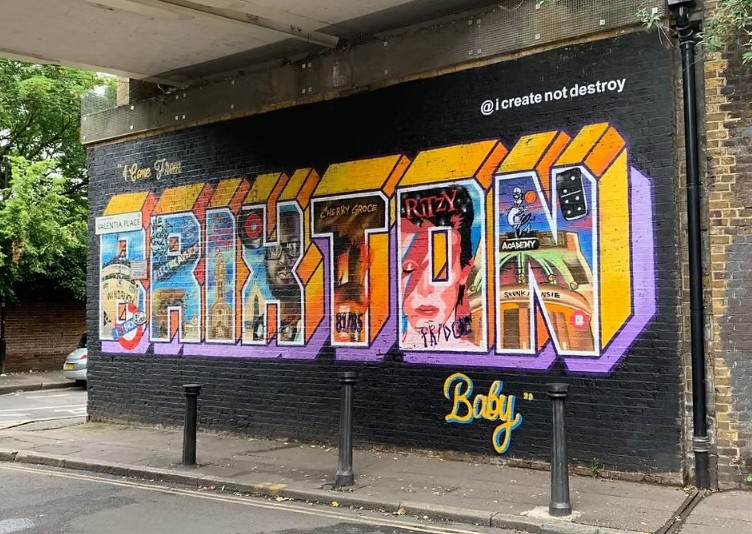
Brixton’s streets are alive with rhythm, diversity, and powerful self-expression, making it one of the most soulful urban art areas in the UK. The walls around the Brixton Windmill and nearby streets showcase murals that celebrate culture, heritage, and resilience. Artists from all backgrounds contribute to this ever-evolving canvas, using colour and imagery to tell stories of identity and community pride. The result is a powerful fusion of creativity and activism that perfectly captures Brixton’s character.
The area’s murals reflect its multicultural roots, paying tribute to icons from music, politics, and everyday life. Many works honour figures who shaped Brixton’s history, creating a visual record of struggle and triumph. Reggae influences, African patterns, and bold typography fill the walls, blending artistic freedom with deep cultural meaning. The art serves not only as decoration but also as a reminder of Brixton’s journey — a story of endurance and transformation told through paint.
What distinguishes Brixton’s street art is its emotional honesty. The messages painted here often address social issues such as equality, justice, and hope. The neighbourhood’s artistic expression feels raw, direct, and authentic — never overly polished. Artists use the city’s walls as platforms for dialogue, encouraging viewers to think and connect. This spirit of openness has turned Brixton into a place where art and activism coexist naturally.
Exploring Brixton’s murals is an experience of connection and discovery. The mix of tradition and modernity gives the area a distinctive voice that resonates beyond London. Every mural feels like a conversation — bold, heartfelt, and deeply human. Brixton continues to stand as a vibrant testament to how street art can tell the story of a community while inspiring creativity and unity across generations.
Address: Brixton Windmill Area (near Windmill Ln), Brixton, London SW2.
9- Whitechapel / Shoreditch fringe, London
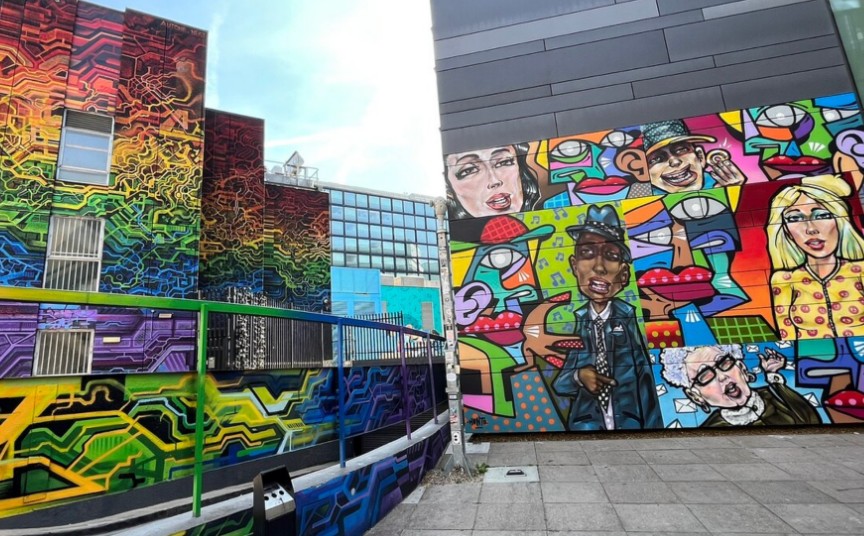
Whitechapel and the Shoreditch fringe area form one of the most inspiring street art spots in the UK, overflowing with creativity, energy, and urban charm. The narrow streets around Pedley Street and Redchurch Street are covered in layers of murals, stickers, and stencils. Each piece adds a voice to London’s artistic conversation, turning the district into an open-air exhibition that never stands still. The combination of old architecture and vibrant graffiti creates a fascinating contrast between heritage and modern expression.
The area has long been a playground for emerging artists. Walls change weekly, reflecting shifting moods, messages, and styles. You’ll find vivid characters, detailed portraits, and experimental abstracts painted across shop shutters and brick façades. The visual energy is almost overwhelming, with every corner offering something new. The blend of bold colours and subtle details showcases London’s unique ability to merge art, street culture, and innovation in one place.
What makes the Shoreditch fringe especially interesting is its blend of grassroots creativity and global recognition. Artists from around the world visit to leave their mark beside local talents. The result is a rich mix of perspectives, where themes of identity, politics, and humour intersect. Independent galleries and design studios nearby often support the movement, turning this part of East London into a living ecosystem of ideas. The area feels authentic and raw, alive with constant reinvention.
For visitors, wandering through Whitechapel and Shoreditch feels like uncovering a visual diary of the city. The art captures London’s pulse — diverse, restless, and beautifully imperfect. Whether it’s a new mural on a warehouse wall or a hidden stencil in an alleyway, every piece contributes to an atmosphere that defines London’s creative underground.
Address: Pedley St / Redchurch St, Shoreditch, London E1.
10- Croydon, London borough
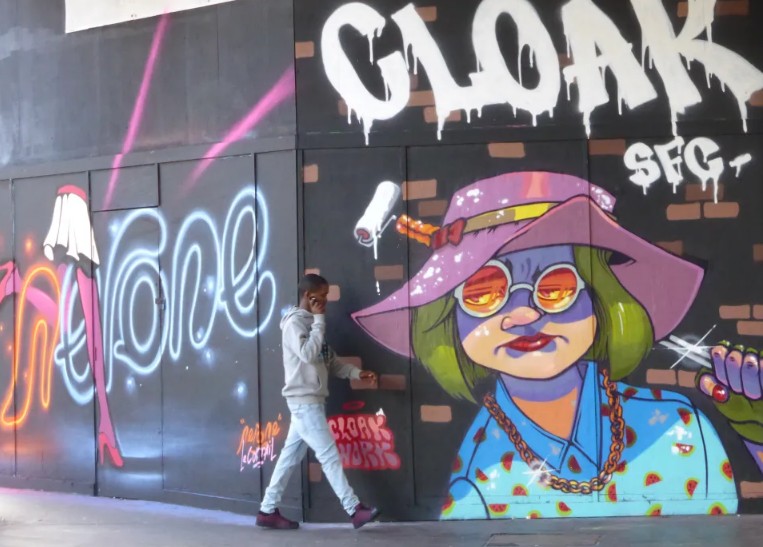
Croydon has emerged as one of the most surprising urban art destinations in the UK, transforming its town centre into a bold and colourful outdoor gallery. Once known for its grey façades, the borough now bursts with vibrant murals that celebrate community and creativity. The transformation began with local initiatives that encouraged artists to reimagine empty walls, bringing new life to the streets around West Croydon station. Today, the area showcases large-scale works that rival London’s most famous graffiti scenes.
The range of artwork is remarkable. Towering portraits, surreal patterns, and graphic-style murals stretch across buildings, car parks, and alleyways. The contrast between old architecture and new art creates a striking visual effect that reflects Croydon’s changing identity. Artists use the city’s surfaces as a canvas for storytelling — blending fantasy, realism, and social commentary. Every wall becomes part of a wider conversation about regeneration, identity, and creativity.
Community plays a central role in Croydon’s artistic growth. Local groups, schools, and residents have embraced the movement, turning art into a unifying force. The murals don’t just decorate; they connect people, inspire dialogue, and attract visitors who come to experience the transformation first-hand. The area feels inclusive and welcoming, showing how street art can revitalise a place without losing its authenticity.
Exploring Croydon’s art scene reveals a borough in motion. Its walls reflect ambition, resilience, and pride — symbols of a city constantly redefining itself through colour. Each mural captures a different aspect of local life, from cultural heritage to modern identity. In this ever-evolving urban landscape, Croydon has proven that street art can transform not only walls but also the spirit of a community.
Address: Town Centre area around West Croydon station, Croydon CR0.
FAQs
What makes street art in the UK so unique?
Street art in the UK stands out for its creativity and diversity. It blends social commentary, humour, and distinctive British culture, often transforming everyday spaces into open-air galleries. Artists experiment with styles ranging from murals to stencils, giving each piece a voice of its own. This constant evolution keeps the UK’s urban art scene fresh and inspiring.
Is street art in the UK legal?
The legality of street art depends on where it’s created. Some walls are officially designated for public art, allowing artists to work freely, while others may still fall under graffiti laws. Many cities now collaborate with artists to encourage legal projects. This balance helps preserve the energy of urban creativity while respecting public spaces.
When is the best time to explore street art in the UK?
Street art can be enjoyed year-round, but spring and summer often provide the best experience. Longer daylight hours and clearer weather make it easier to appreciate details and take photos. Each season, however, brings a new atmosphere, as outdoor art changes with time and the elements.
Why has street art become so popular in the UK?
Street art has grown popular because it connects people directly with creativity in everyday settings. Unlike gallery art, it’s free, accessible, and constantly changing. Many residents and visitors see it as an authentic reflection of community identity, giving voice to ideas and emotions that traditional spaces might overlook.
How can I find the best street art spots in the UK?
Exploring street art spots in the UK is easiest by walking through creative neighbourhoods or following local art trails. Many areas showcase murals and installations that change regularly. Staying observant is key, as new pieces appear unexpectedly, turning even an ordinary street corner into something extraordinary.